
Thirty years ago, Baptist missionaries from South Carolina traveled to Ukraine and helped a college student named Ruslan Antonov believe in Jesus. In 2022, Antonov was asked to pastor a Ukrainian-speaking congregation in Spartanburg.
The church members came from Ukraine, Russia, and Belarus, some fleeing war, some chasing opportunity—all of them facing the challenges that come with building stability in a new country.
Unexpected Paths to Pastoring in Spartanburg
Antonov never imagined how full-circle his story would become thanks to those missionaries. “They brought the Gospel. They were those who encouraged me for ministry in Ukraine,” he said. “I’ve never dreamed for me to appear in South Carolina and to be a pastor of Ukrainian-speaking Baptist church.” Willi Dueck, pastor of Revival Baptist Church also arrived in South Carolina in 2022. Born in Russia and raised in Germany, Dueck moved to the United States to pursue theology and helped plant a church in Kansas City before joining Revival Baptist Church as lead pastor.
They are part of a growing Slavic population in Upstate South Carolina; Spartanburg County alone is home to nearly 4,700 Ukrainian residents, the largest concentration in the state. For SCBaptists, this presents a unique opportunity. Robbie McAlister served as a Mission Catalyst with SCBaptist, working with the Convention to mobilize missionaries. “Most of the time we send people all over the world with the Gospel of Jesus Christ,” McAlister said, “but it's amazing how God has brought the nations to us. We have an opportunity to reach out and serve the communities that are coming to South Carolina with the Gospel.”
Two Churches, One Vision
The two churches actually came from the same family of churches but decided to reach different strategic populations in the Upstate. With services primarily in Russian, Revival Bible Church regularly sees 200 to 250 people on Sundays for teaching. “Most of them are Slavic. Some are from Moldova. We sometimes sing Ukrainian, but the service is in Russian,” Dueck said.
Upstate Family Baptist, on the other hand, speaks primarily Ukrainian with some Russian songs. For the two congregations, it was an intentional choice. Antonov said, “Strategically, it was right to do because when the war started and people started to come here, there were people from Ukraine who needed to hear Ukrainian. And there were people from Ukraine for whom it was okay to be in a Russian-speaking church.”
Finding Openness to the Gospel in Displacement
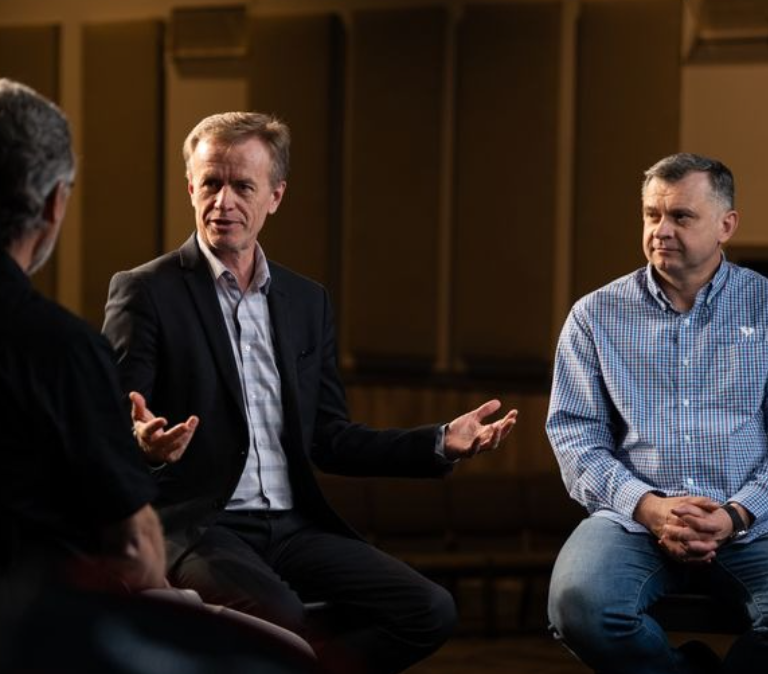
For the two churches, the war between Russia and Ukraine has been a painful reality with widespread impact, and Antonov believes that displacement has created unusual openness. “It caused a lot of pain, a lot of moving, a lot of challenges,” he said.
His family personally felt the challenges of leaving Ukraine after building a solid foundation, then having to rebuild. “Now you have to reestablish everything. Your language, your culture, your work, a church,” Antonov said. “So, I think all these things motivated, at least me and my family, to seek for God, to cry to him, to stick to him.”
Dueck saw the same dynamic. Living in an unfamiliar country, many people are looking for community. “We have many immigrants who are in need of social contacts,” he said. “And many of them, they come to church looking to socialize, to find work, to find a job.” It presents a unique opportunity that the churches are trying to meet with the Gospel.
Both churches have been intentional about meeting people where they are. Revival Bible hosts community orchestra concerts twice a year, drawing believers and non-believers from across the Upstate to hear the Gospel through music. The church has also run a chess program for children, something Dueck sees as a natural bridge. “Many parents want their kids to play chess,” he said. “It is a good tool to help people get acquainted with the church.”
Finding Partnership and Encouragement
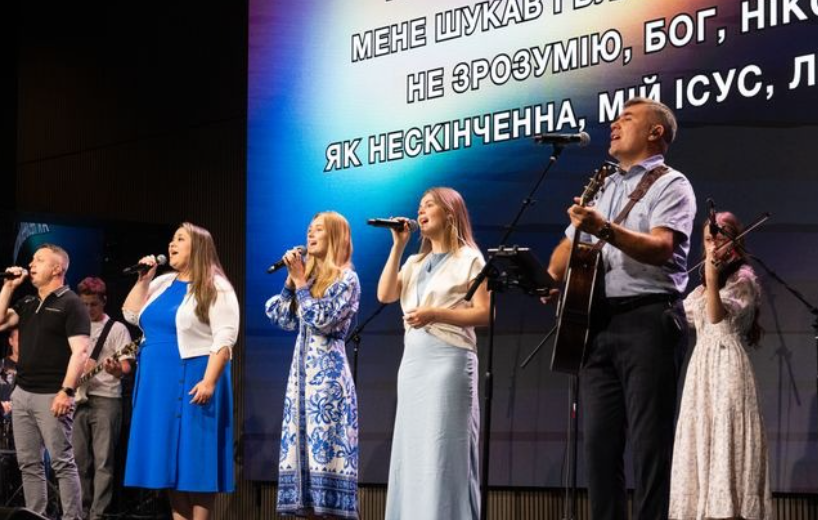
During this time, both Antonov and Dueck have also found encouragement and partnership through the Spartanburg County Baptist Network. “When I came here and when our church started to grow, looking for a place, we joined the local Spartanburg Network,” Antonov said. “And because we want to know the churches, we want to have fellowship, we need encouragement. And I'm so thankful that we did.”
Since launching in 2022, Revival Baptist has used space at Hub City Church. Dueck shared that the partnership has been a blessing. “Their patience is like Jesus' patience. They are very nice to us,” he said.
They also found fellowship among other pastors at events like the Multi-Ethnic Pastors Retreat. “It was very beneficial for me to have a bigger circle of pastors from other countries, from other nationalities as a part of the South Carolina Baptist Convention,” Antonov said. “You need to be in fellowship with other pastors; you need to be in prayer and not just to be insulated in your own church.”
What Comes Next
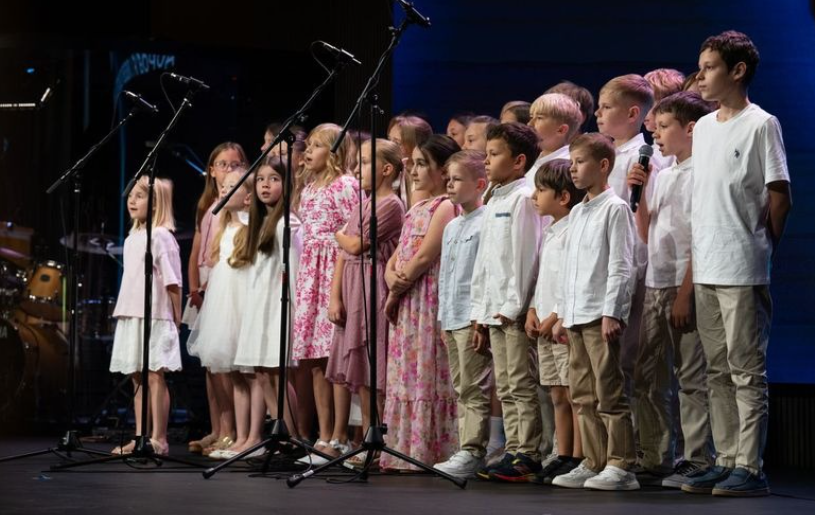
Both pastors are thinking about the future of reaching Slavic people in the Upstate. Dueck hopes to launch an English-speaking service for the next generation of Slavic young people who are growing up in American schools and culture. Antonov’s sights are set on planting churches in communities that currently have no Ukrainian Baptist church, potentially in Greenville or Columbia. “We are in the process of growing our own spiritual leaders,” he said. “I think there will be a time when our church will easily send a team to start another church.”
Supporting that growth is exactly what the Janie Chapman Offering for State Missions makes possible by funding training for future pastors, resourcing church planters, and coming alongside ethnic congregations doing the work of the Great Commission in the Upstate. When asked what he would say to SCBaptist churches considering giving to Janie Chapman, Antonov’s answer was simple: “It works. It's a big blessing. Education and missions.” Dueck encouraged churches, “Give generously,” he said, “and praise God for what you already do.”